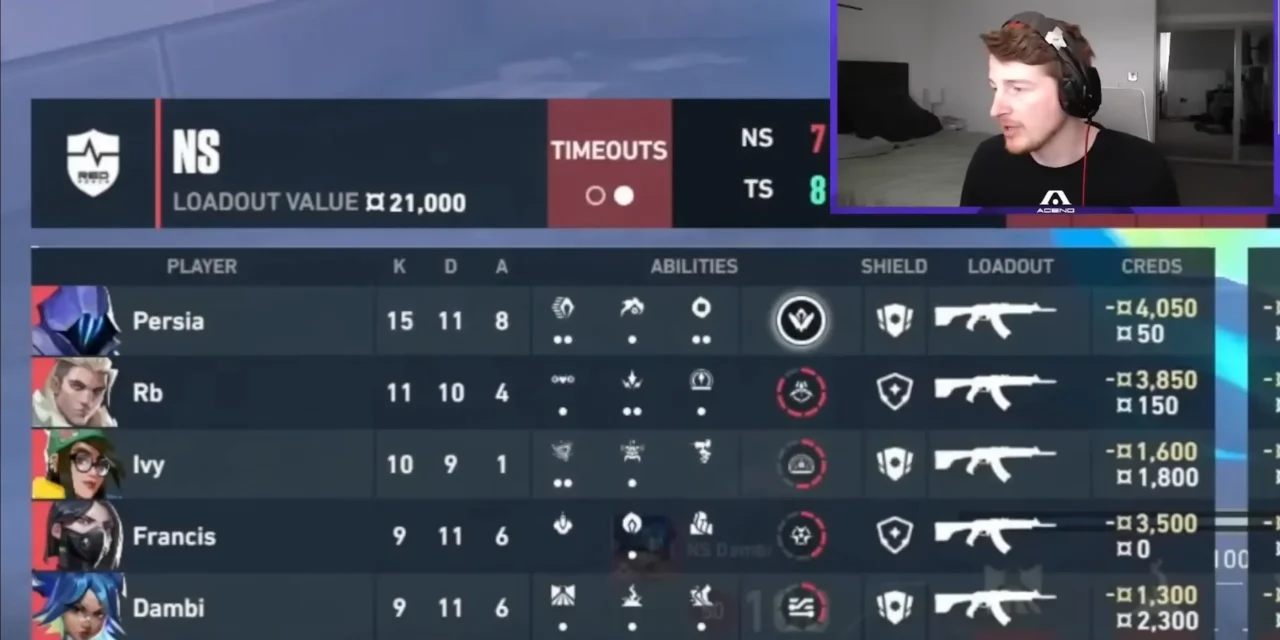
Most teams don’t bring Viper to Ascent, and when they do, her value often feels questionable on attack. But Nongshim’s setup proved the doubters wrong.
Here’s the core of their strategy:
- Main Viper Wall: The wall slices across A main toward the site. It gives free A main control round after round.
- Mid Orb Pressure: Viper’s orb lands near mid catwalk or market to create mid pressure and deny info.
- Free Real Estate: Team Secret, Nongshim’s opponents, barely contested A main. With a Neon on their side, Nongshim had no trouble sliding through smokes, punishing anyone who tried.
Why This Setup Works
- Predictable Defense Response: Every team facing this comp tries the same counter: put Cypher utility near tree or short to catch a Viper lurk. Once Nongshim spotted that trip, they’d just shock dart it and go.
- A Main for Free: With that Viper wall and the pressure of Neon’s movement, no defenders dared swing or contest early. Nongshim controlled A main every single round without breaking a sweat.
- Massive Info Denial: Between the orb mid and the threat of a Viper lurk up short, defenders had to respect multiple angles. One missed timing, and Nongshim collapsed with speed.
Secret’s Attempts to Adapt Fell Flat
Team Secret tried rotating Cypher utility, putting one-ways, and even tried holding earlier angles. It didn’t matter.
- They couldn’t contest A main consistently.
- Nongshim often executed straight into A behind their utility, shocking the trip and pushing in with confidence.
- When Secret finally rotated utility to A, Nongshim lurked B instead—or Viper faked A and dragged three players away while the rest of the team hit the opposite site.
Nongshim didn’t just abuse their Viper wall—they layered threats on both extremities and used perfect reads on Team Secret’s responses.
What Can Other Teams Learn?
- Creative utility = map control. One well-placed Viper wall can shut down an entire half of the map.
- Watch your Cypher trips. Nongshim hard-punished predictable utility placements.
- Be ready for counter-adaptations. Nongshim preemptively punished Secret’s rotations with lurks, fakes, and mid pressure.
This setup isn’t just good—it’s instructional. Expect to see more teams test Viper on Ascent using similar ideas.
Final Thoughts
Nongshim’s attack half against Team Secret was a masterclass in using creative utility, tempo control, and lurks to break a defense’s rhythm. It’s rare to see such consistent dominance off a single wall, but here, it worked again and again.
Whether other teams can pull it off remains to be seen, but one thing’s certain—Viper on Ascent is back, and this time, it’s serious.
For more high-level Valorant breakdowns and the latest meta insights, stay locked to AllValorant.gg.
Original breakdown and source: Thinking Man’s Valorant on YouTube
Frequently Asked Questions about Nongshim’s Viper Setup on Ascent
Q: Why is Viper on Ascent considered unusual?
A: Traditionally, Ascent is dominated by controllers like Omen or Astra due to its wide open spaces and vertical choke points. Viper’s utility can feel limited without natural terrain to wall off—until Nongshim flipped the meta.
Q: What makes Nongshim’s Viper setup so effective?
A: Their A-site wall gives them free control of A main every round, while their mid orb and fast pacing create enough pressure to keep defenders guessing. It’s a synergy of utility, timing, and map control.
Q: How did Team Secret try to counter it?
A: They moved Cypher utility around, tried using one-ways, and rotated players—but Nongshim shock darted trips and executed confidently through utility, or rotated to punish over-adjustments.
Q: What role did Neon play in the setup?
A: Neon amplified the pressure. Her ability to quickly slide through smokes made it dangerous for defenders to challenge through Viper’s wall, discouraging early aggression and securing A control.
Q: Can other teams copy this setup?
A: Yes, but success depends on flawless utility coordination and understanding how to punish typical Cypher trip spots. Teams need a proactive Neon or fast duelist to capitalize on the pressure Viper provides.
Q: Should Viper be played more on Ascent now?
A: Nongshim’s performance suggests so—at least as a niche strategy. It won’t replace Omen outright, but in the right comp and hands, it can dominate attack halves.