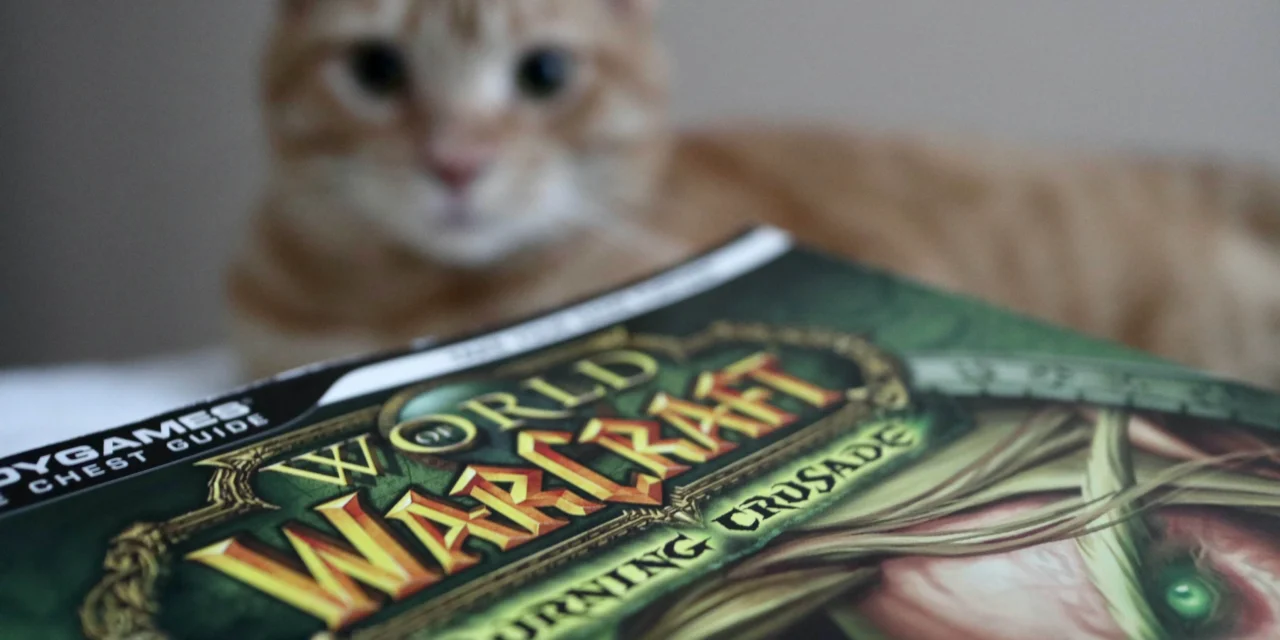
What is World of Warcraft? A dry Blizzard press release will tell you it’s the most successful MMORPG in the genre’s history, developed at a “modest” cost of 50 million euros, and by 2007, it had earned 1.2 billion dollars for its publisher. But what’s far more interesting is what was happening within and around the game at the time. Let’s take a look back and trace WoW’s evolution through specific events, each one a milestone forever etched into the annals of WoW history.
A Rocky Beginning
The first official World of Warcraft servers launched on November 23, 2004, at the time, only in America. It was a kind of stress test: Blizzard was evaluating its creation in the most devoted and massive market before unveiling the game to European players. Demand was overwhelming. Servers couldn’t handle the load, they crashed, and login queues reached into the hundreds. Forums were on fire; some shared first impressions, others cursed the lag and technical hiccups.
On February 11, 2005, the European version went live. More than half a million boxes hit store shelves, though the original plan had been to sell around 280,000. Within three days, the number of registered accounts exceeded 290,000. Game worlds were bursting at the seams, customer support was gasping under the flood of tickets, and thousands of people were storming the servers, trying to get in. It was the dawn of a new era.
Yet despite all these challenges, the game remains popular to this day, as do services like https://skycoach.gg/, which offer paid boosting services for World of Warcraft players, including character leveling, raid assistance, rare item and gold farming, and more. In other words, even after 20 years, the game isn’t just “surviving”; it continues to grow and draw in new players
The First Major Challenges
WoW’s first year was remembered as its wildest and most chaotic. There were no serious raids yet; players roamed the world, hunted for experience, and puzzled over quests with far-from-perfect descriptions. Battlegrounds didn’t exist either; they only came in June. Until then, PvP had a life of its own in Tarren Mill, which had turned into a battlefield of endless war. Mass brawls, surprise attacks, hundreds of deaths, and monstrous lag — it all became legend.
The player community hadn’t yet gotten used to the constant class “buffs” and “nerfs.” When Blizzard slightly weakened the warrior class in a patch, players on the Argent Dawn server staged a protest: hundreds of level 1 gnome warriors marched through the game world, chanting against the changes. Game Masters tried to break up the demonstration, but failing that, simply booted the participants from the game. Thus unfolded WoW’s first protest march.
But the biggest meme of 2005 gave the world Leeroy Jenkins. He stormed into the Blackrock Spire instance, completely ignoring the raid plan, and doomed the entire group to instant wipe. His shout “Leeeroy Jeeenkins!” went viral; the video is still considered iconic. Leeroy’s name became shorthand for reckless, impulsive players. Jenkins himself became a community star, giving interviews and selling merch with his name. Later, he was immortalized in Blizzard’s collectible card game.
Game as a Mirror of the World
One day, a “plague” swept through the world of WoW. It all started with the boss Hakkar from Zul’Gurub, who infected players with poisonous slime. One hunter managed to take the infection outside the instance first by infecting their pet and then summoning it in one of the capital cities. The disease spread instantly, even passing through NPCs, and soon cities were littered with corpses. The Archimonde server was the first to suffer. Low-level characters died immediately, and even well-equipped players couldn’t withstand the pressure of the epidemic.
It was only after several hours that Blizzard was able to stabilize the situation, but the effects that followed were not something that one would have guessed. Scientists became interested in the plague. Princeton researchers analyzed the dynamics of infections and determined that its behavior in WoW was similar to that of a real-life epidemic. Subsequently, the Sandia National Laboratories got into the scene, making a suggestion that major online games could become something people could use to study humanity in crisis situations. The event even got to the BBC newsfeed.
Conclusion
The launch of World of Warcraft was an explosive cultural phenomenon that combined wild excitement, technical hiccups, the first mass protests in online space, a plague that drew the attention of scientists, and viral memes that evolved into internet folklore. Every event was a legend, and every player from those years etched their name into the shared chronicle of virtual history. It was an era of discoveries, mistakes, genuine passions, and sincere engagement. That very chaos and unpredictability is what made World of Warcraft not just a game but a monument to the history of an entire generation.